Thursday, September 10, 2009

ANIMATION


Animation is the art of creating moving images with using computers. It is a sub field of computers graphics and animation. Increasingly it is created by means of 3D computer graphics, though 2D computer graphics are still widely used for low bandwidth and faster real-time rendering needs. Sometimes the target of the animation is the computer it self, but it sometimes the target is another medium, such as film.

It is also referred to as CGI (Computer-generated imagery or computer-generated imaging), especially when used in films. To create the illusion of movement, an images is displayed on the computer screen then quickly replaced by a new image that is similar to the previous image, but shifted slightly.

This technique is identical to how the illusion of movement is achieved with television and motion pictures. Computer animation is essentially a digital successor to the art of stop motion animation of 3D models and frame-by-frame animation of 2D illustrations. For 3D animations, objects are built on the computer monitor and 3D figures are rigged with a virtual skeleton. For 2D figure animations, separate objects and separate transparent layers are used, with or without a virtual skeleton.

The the limbs, eyes, mouth, clothes, etc. of the figure are moved by the animator on key frames. The differences in appearance between key frames are automatically calculated by the computer in a process known as tweening or morphing. Finally, the animation is rendered. For 3D animations, all frames must be rendered after modeling is complete. For 2D vector animations, the rendering process is the key frame illustration process. while tweened frames are rendered as needed. For pre-recorded presentations, the rendered frames are transferred to a different format or medium such as film or digital video.

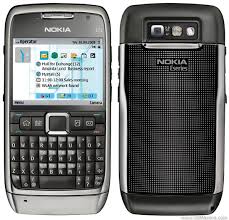
NOKIA E71

Dimensions : 114X57X10

Weight : 127 gms

Talktime : 10.5 hrs

Standby : 408 hrs

Screen : 16 million colors

Size : 2.36"

Expandable : 8 GB

Bluetooth : Yes

Wi-Fi : Yes

Camera : 3.2 Mp

Flash : Yes


Vedio
: Yes

Phone book :
Shared

Frequecy :
Quad Band

GPRS/EDGE/3G:
Yes/Yes/Yes

Operating System :
Symbian S 60

Music Player :
Yes

FM Radio : Yes


Form Factor: Bar

Touch Screen :
NO

QWERTY :
Yes

Burn test rating
: 84

Price : Rs.19,100

Saturday, September 5, 2009

ENCRYPTION IS SAFE FROM FUTURE QUANTUM COMPUTERS?


One of the themes of Dan Brown’s The Da Vinci Code is the need to keep vital and sensitive information secure. Today, we take it for granted that most of our information is safe because it's encrypted. Every time we use a credit card, transfer money from our checking accounts -- or even chat on a cell phone -- our personal information is protected by a cryptographic system
But the development of quantum computers threatens to shatter the security of current cryptographic systems used by businesses and banks around the world.
“We need to develop a new encryption system now, before our current systems -- such as RSA -- becomes instantly obsolete with the advent of the first quantum computer,” says Prof. Oded Regev at Tel Aviv University’s Blavatnik School of Computer Science. To accomplish that, Prof. Regev has proposed the first safe and efficient system believed to be secure against the massive computational power of quantum computers and backed by a mathematical proof of security.
Secure for Centuries

Prof. Regev stresses it is imperative that a new cryptographic system be developed and implemented as soon as possible. One reason is that current information, encrypted with RSA, could be retroactively hacked in the future, once quantum computers are available. That means that bank and other financial information, medical records, and even digital signatures could instantly become visible.
“You don’t want this information to remain secure for just 5 or 10 years until quantum computers are built,” says Prof. Regev. “You want it to be safe for the next century. We need to develop alternatives to RSA now, before it’s too late.”
New Cryptographic System

Cryptographic systems are used to transmit secure information such as bank and online transactions, and typically rely on the assumption that the factoring problem is difficult to solve. As a simplified example, if the number 3088433 were transmitted, an eavesdropper wouldn’t be able to tell that the number is derived from the factors 1583 and 1951. “Quantum computers can ‘magically’ break all of these factoring-based cryptographic systems, something that would take billions of years for current computers to accomplish,” Prof. Regev explains.

The current gold standard in encryption is the universally used RSA cryptosystem, which will be instantly broken once quantum computers are a reality -- an event predicted to happen as early as the next decade. To replace RSA in this new reality, Prof. Regev combined ideas from quantum computation with the research of other leaders in the field to create a system that is efficient enough to be practical for real-world applications. Prof. Regev’s work was first announced in the ACM Symposium on Theory of Computing and will appear in the Journal of the Association for Computing Machinery. His work has now become the foundation for several other cryptographic systems developed by researchers from Stanford Research Institute, Stanford University, and MIT. Its potential real-world applications are extensive, ranging from banking transactions to eBay and other online auctions to digital signatures that can remain secure for centuries.

Friday, September 4, 2009

THE FUTURES SUPER FAST COMPUTER


Computers which use light to process large amounts of data faster than ever before are just one of many groundbreaking potential applications of a new £6 million research programme at Queen’s University Belfast and Imperial College London, launched September 1, 2009.
The Engineering and Physical Sciences Research Council (EPSRC) is funding the two universities to establish a world-leading research programme on the fundamental science of so-called ‘nanoplasmonic devices’
Nanoplasmonic devices’ key components are tiny nanoscale metal structures - more then 100 times smaller than the width of a human hair – that guide and direct light.

The structures have been tailor-made to interact with light in an unusual and highly controlled way. This means they could one day be used to build new kinds of super-high-speed ‘optical computers’ – so named because they would process information using light signals, instead of the electric currents used by today’s computers.

At present, the speed with which computers process information is limited by the time it takes for the information to be transferred between electronic components. Currently this information is transferred using nanoscale metallic wires that transmit the signals as an electric current.

To speed up the process, the scientists at Queen’s and Imperial hope to develop a way of sending the signals along the same wires in the form of light.

In order to achieve this, they are developing a raft of new metallic devices including tiny nanoscale sources of light, nanoscale ‘waveguides’ to guide light along a desired route, and nanoscale detectors to pick up the light signals.

Similar approaches may also help in the development of devices for faster internet services.

Professor Anatoly Zayats from the Queen’s University’s Centre for Nanostructured Media who leads the project said: “This is basic research into how light interacts with matter on the nanoscale. But we will work together with and listen to our industrial partners to direct research in the direction that hopefully will lead to new improved products and services that everyone can buy from the shelf.”

Professor Stefan Maier, who leads the research team at Imperial added: “This is an exciting step towards developing computers that use light waves, not electrical current, to handle data and process information. In the future these optical computers will provide us with more processing power and higher speed. This will also open the door to a world of possibilities in scientific fields at the interface with the biosciences, and perhaps even in the world of personal computing.”

The project is also supported by INTEL, Seagate, Ericsson, Oxonica, IMEC and the National Physics Laboratory.

Thursday, August 27, 2009

XLP technology Nano microcontrollers


Microchip Technology has announced a new family of 8-bit PIC microcontrolers (MCUs) featuring nanowatt XLP technology, which enable extremely low sleep currents. The high-performance, low-power PIC18F13K22, PIC18F13K22, PIC18F14K22 and PIc18LF14K22 (PIC18F1XK22) MCUs are available in 20-pin packages and provide 1.8V-5.5V operation, with up to 16 Kb Flash program memory. Nano watt XLP technology allows the PIC18LF1XK22 MCUs to operate longer using less power, or with fewer battery changes, by enabling sleep current of 34 nA, typical at 18.V; timer 1-oscillator currents of 800 nA, typical ata 1.8 V, 32kHz; and watchdog timer currents of 300 nA, tyical at 1.8 V.

Voice modules


The wireless transceiver modules from u-blox are optimised for low-cost, mass market, location-based applications requiring mobile connectivity. Featuring low power consumption and GSM/GPRS class 10 data transmission with voice capability, the LEON G100 and G200 combine base band, RF transceiver, power management unit and power amplifier in a single, easy-to-integrate solution. These are ideally suited for M2M and automotive applications such as automatic meter reading, remote monitoring automation and control, surveillance and security, e-call,road pricing, asset tracking, fleet management, anti-theft systems and point-of-sale terminals.

Wednesday, August 26, 2009

New arrivals

Nano Battery !!

Researchers at the Fraunhofer Researach Institution for Electronic Nano Systems ENAS have developed a battery the weighs less then 1 gram and is less than 1 millimeter thick. The battery, which can be fprinted in a process similar to silk-screening shirts, could power bank cards or other slim application carriers. " The battery is environment-friendly as it contains no mercury. Its voltage of 15.V lies within the normal range. By placing several batteries in a row, voltages of 3V,4.5V and 6V can also be achieved.

All in one mobile phone charger.

After months of negotiations with hte European Commission, major producers of mobile phones have finally agreed to develop a standard for phone charging based on the Micro USB interface. The companies that signed the MoU include Apple, LG, Motorala, NEC , Nokia, Qualcomm, Research in Motion, Samsung, Sony Ericsson and Texax Instruments.
With this agreement, consumerswill be able to charge mobile phones anywhere from the new common charger. This also means considerably less electronic waste, because people will no longer have to throw away chargers when buying new phones. The large majority of phones will charge within two hours with the new common chargers, says the EU. Only in combination of a large battery with a small charger, the phone will charge within six hours.

Tuesday, August 25, 2009

AUTOMOBILES

DEFINITION:By definition an automobile or car is a wheeled vehicle that carries its own motor and transports passengers. The automobile as we know it was not invented in a single day by a single inventor. The history of the automobile reflects an evolution that took place worldwide.

It is estimated that over 100,000 patents created the modern automobile. You can point to the many firsts that occurred along the way to producing the modern car; and with that goal in mind, highlighted below are articles, biographies, time lines, and photo galleries related to the history of the automobile and its many inventors.

Sunday, August 23, 2009

FASTEST SUPER COMPUTER

A scientist of Indian origin has created a new supercomputer, called Cystorm which can carry out 28.16 trillion calculations per second.
Cystorm, a sun Microsystems machine, was developoed by Mr SrinivasAluru from the Iowa state University. The 3,200 computer procesor cores that power Cystorm makes it perform 28.16 trillion calculations per second, which is five times the peak of CyBlue, an IBM Blue Gene\L supercomputer that's been in campus since early 2006 and users 2,048 processors to do 5.7 trillion calculations per second.
According to Mr Aluru, Mr Ross Martin Mehl, professors of computer Engineering and the leaders of the cystorm project, the new machine also scores high on a more realistic test of a supercomputer's actual performance:15.44 trillion calculations per second.

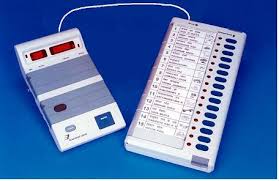
EVM technology can tamper?


Electronic Voting Machine :

(EVM technology)

H
ardware

Inadequately secured hardware can be subject to a physical Tampering. Some critics, such as the group "Wij vertrouwen stem computers niet" ("We do not trust voting machines"), charge that, for instance, foreign hardware be inserted into the machine, or between the user and the central mechanism of the machine itself, using a main in the middle attack, and thus even sealing DRE machines may not be sufficient protection. Claim is countered by the position that review and testing procedures can detect fraudulent code or hardware, if such things are present, and that a thorough, verifiable chain of custody would prevent the insertion of such hardware or software.

Software

Security experts, such as Bruce Shenier demanded that voting machine source code be publicly available for inspection.Others have also suggested publishing voting machine software under a free software license is done in Australia.

Suggestions for protection

In December 2005 the US Election Assistance Commission unanimously adopted the 2005 Volantary voting system guidelines which significantly increase security requirements for voting systems and expand access, including opportunities to vote privately and independently, for individuals with disabilities. The guidelines will take effect in December 2007 replacing the 2002 Voting System Standards (VSS) developed by the Federal Election Commission.

Some groups such as the Open voting Consortium that to restore voter confidence and to reduce the potential for fraud, all electronic voting systems must be completely available to public scrutiny.

Also proposed is the requirement for use of open public standards and specifications such as the Election Markup Language(EML) standard developed by OASIS and now under consideration by ISO. These can provide consistent processes and mechanisms for managing and performing elections using computer systems.


Friday, August 21, 2009

CORDED HEADSETS

GN Netcom has launched lightweight, sturdy and professional quality headsets for use in cost_conscious contact centres.
The jabra GN1900 headsets feature a noise canceling microphone,which filters out unwanted background noise, and Peakstop technology,which protects users from harmful sounds. The multiple adjustment points make these adaptable to individual preferences and the lightweight design ensures all-day comfort. The GN1900 QD variants have been designed for use with traditional desk telephones,however the future-proof design enables users to migrate to IP hard phones.
The GN1900 USB variants meet the increasing demand for cost_effective, professional VOIP headsets.

BUSINESS PHONE

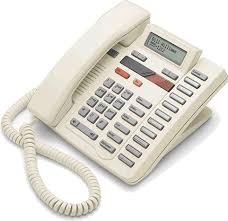
Siemens Enterprise Communications has introduced the Bittel CLIP business phone. The phone is line_powered and does not require any external battery. Suitable for offices, it is a full_duplex, hands_free speaker phone with features like message waiting light, 16-digit caller ID with adjustable display contrast, phonebook (up to25entries) and a data port for connecting a parallel phone,fax machine, answering machine,etc.

Wednesday, August 19, 2009

Technology News


Mobile Internet usage exploding

Mobile INternet usage is growing at a phenomenal rate. Social networking is driving that growth with a third of young adults regularly accessing Face book and Twiiter from their mobiles. A eport byindustry analyst CCS Insight, based on a UK survey of more than 1`000 adults between 16 and 35 years, offers insights into the mobile Internet habits of this technology-savvy and demanding consumer group.
According to the report, men are twice as likely as women toaccess the Internet through their mobile phone; ;young adults expect mobile content, expecially music and videos, to be free; and BBC iPlayers is the service people would like the most to see on their phones. Paloo Pescatore, report author and head, mobile content CCS Insight, shares, "Forget music downloads and video-social networking is what people want. Media owners and operators will has to find new ways to make money from their assets."

PC sales record negative growth

The total PC sales between April2008 and March 2009, with desktop computers, notebooks and netbooks token together, were 6.79 million units, registering a decline of seven per cent over the previous year - according to Manufacturers' Association for Information Technology (MAIT). IT consumption in 2008-09 was severely impact, especially in the slowdown in the Indian economy.
Impact on consumption of notebooks was most pronounced as growth plummeted to a negative 17 per cent compared to a high of 114 per cent in the previous year. Scale of desktops declined four per cent. The October -November-December quarter was the most adversely impacted, subsequent to which growth in PC consumption started to show signs of revivial. With business sentiment gradually gaining momentum, PC consumption in fiscal 2009-10 ex expected to cross 7.3 million units, registering a seven per cent growth.

Tuesday, August 18, 2009

Electronic Tongue


Electronic Tongue to sense taste

Scientists have devised a small, cheap, lab-on-a-chipo sensor that accurately identifies sweetness. It can accurately identify the full sweep of natural and artificial sweet substances, including 14 common sweeteners, using easy-to-read colour markers.

"We take things that smell or taste and convert their chemical properties into a visual image," said study leader Kenneth Suslick, University of Illinois a -Urbana-Champaign (UI-UC). This sensory "sweet-tooth" will help to ensure that beverages taste great with a consistent flavour.

Monday, August 17, 2009

ELECRONIC NEWS

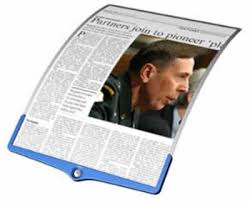
E-paper's green credentials will boost adoption

The use of electronic paper, also known as 'e-paper,' is increasing as a result of its ultra-low power consumption, a similar user experience to real paper and 'green' benefits, according to a report from market research firm Gartner. E-paper is a display medium intended to mimic the appearance of ordinary ink on paper while being rewritable.
Gartner said that despite disadvantages of poor colour and refresh rate characterists, e-paper will hve significant benefits over other display media and positively impact the traditional paper market, the retail display sector, a number of consumer markets and the office environment in years to come.
One of the key drivers for e-paper adoption is the way it is continuously evolving to include new technologies. Recent additions include touchscreen, wireless connection and rewritable colour support capabilityinto devices using e-paper. Multiple e-book readers have also been introduced and applications of the technology are now expanding beyond e-book readers to include device displays for phones, clocks and watches.
Gartner believes that the cost of e-paper displays will need to fall further if it is to act as a viable mainstream alternative to print media, especially as the falling costs and increasing quality of alternative technologies-such as OLED and LCD - could moderate the growth potential of e-paper.

Sunday, August 16, 2009

COMMUNICATION EQUIPMENTS

Carded headsets

GN Netcom has launched lightweight sturdy and professional quality headsets for use in cost-conscious contact centers.
The Jabra GN1900 headsets feature a noise canceling microphone, which filters out unwanted background noise, and PeakStop technology, which protects users from harmful sounds. The multiple adjustment points make these adaptable to individual preferences and the lightweight design ensures all-day comfort. The GN1900 QD variants have been designed for use with traditional desk telephones, however the future-proof design enables users to migrate to IP hard phones.
The GN 1900 USB variants meet the increasing demand for cost-effective, professional VoIP headsets

Saturday, August 15, 2009

TEST AND MEASUREMENT


Spectrum analysers

With a bright colour display to analyse any kind of signal within the frequency range of up to 1 GHz, ATL's SPA01 spectrum analyeser meets the RF measurement needs of educational setups and the industry. The low-cost, high-performance digital synthesised RF measurement instrument has a tracking generator with 16-bit half numerical display (center frequency, 0.01 MHz resolvability) and intermediate frequency and 4 kHz video filters.

Thermal imager

SUMITRON has introduced a low cost, high-performance camera from Ideal Industries, USA, that blends visible images with infrared images to track down problems that threaten the continuous operation of server rooms and data centres. The Heat Seeker detects hotspots in servers, UPS batteries and electrical connections before costly system failures occur. It also measures temperature fluctuations in cooling systems.

Electronic weighing scale

Innovative Systems has developed an electronic weighing scale with built-in thermal printer. This machine generates bill without the need of computer and is suitable for those retailers who don't want to keep computer. The machine is equipped with a 16-bit, low-power, high-speed Renesas microcontroller and 24-bit sigma-delta analogue-to-digital converter with an accuracy of 1 gam at 35 kg. It has two sets of 4-window, 6-X7-segment displays (one for customer and second for retailer) to show weight, rate of the item, amount and total amount of all the items purchased by the customer. A separate RS-232 port is available to connect additional booth display. Out of 100 preprogrammed items with their names and rates, 32 items can be accessed directly from the memory via a separate 4X4 keyboard.

NEW TOOLS AND EQIPMENTS

Pad-printing machine

Indus Engineering offers an economical pad-printing machine (Model FXP-1010-C) with a ceramic ring and magnetically sealed cup. The machine is equipped with a quick-changover image plate to facilitate fast-changing jobs and continuously variable image transfer rate to accommodate different types of articles.
The closed-type machine is highly efficient, accurate and user friendly. It features inductive proximity sensors for trouble free working, auto fault detection facility and dual-impression printing mode for translucent inks.

Drying systems for Solar cell metallisation

Rehm Thermal Systems has launched an advanced series of drying systems for solar cell metallisation. The RDS 2100 and RDS 3000 offer a variety of advanced process features and thermal control that enable PV manufaturers to move their processes to an entirely new level of efficiency and yield. The drying process consists of a combination of either five or seven IR zones and one central convection zone. This design combination offers temperature profiling that can be adjusted for both precision and flexibility.
The systems guarantee a safe transport through the oven either via mesh belt or with pin chain up to three lanes. At belt speeds of up to 6m/minute, these provide high through puts of up to 5700 wph. A condensate residue management system controls the buildup of unwanted paste solvent and vehicle residue in the process chamber and extends the maintenance intervals.

Electronic load for DC power supply testing

Prime Electronics has introduced a feature-packed electric load (Model EL 601) measuring only 14.5X25X25 cm cube and weighing 7 kg. It is designed for easy portability and saves valuable space on the test bench. All controls and displays are provided on the front panel for ease of operation. Multiturn load adjustement pot makes it very easy to precisely set the load. Separate volt age and current/power meters give continuous display of load voltage and current/power on the front panel.
With voltage range of 2060V DC, current range of 0-120A and power range of 600W, the EL 601 is useful for testing of switching power supplies, SMPS units, DC power plants, DC-DC converters, solar chargers, variable power supplies, telecom power supplies, medical power supplies, solar charge controllers, redundant power supplies, hot-swappable power supplies, multi-output power supplies, battery chargers, float-cum-boost chargers, DINH rail power supplies and other DC sources such as fuel cells and batteries.

NEW....NEW...NEW...

VALUE-FOR- MONEY NET BOOK

1All those who want to pack their world in something as smallas 24 cm can now opt for intex N101-WC1100 net book .
Features & USP The notebook has a 24cm display and weights 1.2kg(with battery). Equipped with intel Atom N270 processor, it is power efficient and provides a fast day-to-day computing experiences. The net book packs a 160GB DDR2 memory expandable up to 2GB. It boats of WLAN 802b/g wirelessLAN module and also features Bluetooth connectivity,7-in-1 mini card reader,WSVGALED backlight display and a battery life of 240 minutes.

price:
Rs18,900 (black)
Rs 19,400 (red)

STYLISH LCD MONITORS


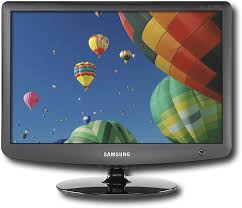
Samsung India has launched Lavender Series of LCD monitors with new and stylish features.
Features & Usp The Lavender series monitors are avaible in 55cm and 58cm screen sizes with dynamic contrast ratio of 50000;1, reaponce time of 2ms, viewing angle of 170\160 degree and a 1d6;9 wide-format panel that is made for multimedia and optimised for HD content. these boast of an elegant touch-of-colour design in rose black colour with a distinctive fine cut on the rear.

The monitors have front OSD touch buttons that emit red light from under the panel. Use of biodegradable components in manufacturing of exterior panels makes these 100per cent recyclable and environment-friendly. The monitors consume less than 1w of power in the power-off mode, which makes these more energy-efficient than conventional monitors.

Price:
Rs. 12,500 (55 cm)
Rs. 13,500 (58 cm)

Toshiba Satellite M500 Notebook

Toshiba India has launched the Premier series Satellite M500 notebook, which features a 35.6cm LED back light display with clear super view technology and widescreen 16:9 aspect ratio that offers a resolution of 1366X768 pixels and a luminance of 260 NITs. The Harman/Kardon stereo speakers provide a vibrant sound experience. The Satellite M500 has an integrated DVD sper multi-drive (dual-layer), a 5-in-1 card reader, three USB 2.0 interfaces and an additional eSATA/USB combo port that supports sleep-and-charge, allowing a customer to charge an MP3 player, mobile phone or other device while the laptop is switched off. The notebook is priced at Rs. 53,490 (appx.)

Friday, August 14, 2009

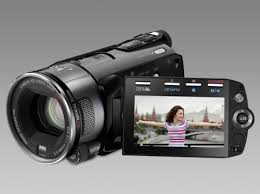
How to use Camcorder

Do's
  1. Do some research work before you by either a digital still camera or a camcorder
  2. Decide what is more important, shooting good-quality video or good-quality stills?
  3. Checkout the products you want to purchase. Handling, features and even looks are important
  4. Read the manual carefully before using the product. Often you might not get satisfactory results just because you are not using the camera properly. In case of any doubt, ask for a demo from the retailer
  5. Take proper care of your digital equipment. Use the necessary precautions, and always use proper recommended accessories.
Don'ts
  1. Do not purchase from unauthorised dealers. You may experience malfunctions, and is some cases, the manufacturer may not be able to provide technical assistance
  2. Do not use accessories that are not recommended with you proudct
  3. Do not disassemble the camera. This might cause shock hazards, or severe damage to the product. Read the safety recommendations provided in you manual
  4. Do no let small children handle the camera without supervision
  5. Do not violate safety regulations while shooting.

Thursday, August 13, 2009

New Updates

Power LED ceiling light

BINAY has launched 300X300 mm power LED luninaires that are suitable for indoor mounting on ceilings. Manufactured with long-life, high intensity LEDs having efficiency of 100 lumens per watt in cool white (5500-6500 d K) these lamps are available in surface-mount or recess-mount fittings. They can be recess-mounted in square cutout of 300X300 mm square.
The luminaires are ideal for mounting in corridors, small rooms, kitchens and other small areas in commercial and residential structures. These are available in 12W, 20W and 30W ratings. The designed life is 50,000 hrs to L70 or 100,000 hrs to L50.

Portable hard drive
Transcend has introduced a new portable hard drive that combines good looks and shockproof features in a compact portable size. Similar in size and weight to a deck of playing cards, the 4.6cm Storejet 18M is clad in a sporty two-tone contrast colour scheme. It features and advanced dual-stage shock-protection sytem that incorporates internal suspension technology with an extra-durable, vibration/impact-dampening silicone outer shell.
Fully compliant with USB 2.0 specifications, the drive features a one-touch auto-back button that lets users instantly backup and synchronise date with their notebook or desktop PC. It is priced at Rs.6000 and available with 120GB storage capacity.

16GB SD card
KINGMAX claims to have introduced the world's highest-capacity waterproof SD card. The 16GB SD card adopts PIP technology inside, which has passed the waterproof test and is IPX7-certified from SGS. In addition, due to the unique packing technology, it prevents piracy. The built-in error-correcting code detects and corrects transfererrors and supports 'contents protection for recordable media' mechanism.
The card is available in 2GB, 4GB, 8GB and 16GB capacities

Tuesday, August 11, 2009

Wireless and Screenless MP3 Players

If you love listening to music but don't like to si glued to the computer,tangled in wires, take a sigh of relief. Companies are rolling out music systems that are not only wireless but also screenless. Targeting the youth are scend, Bose, Moser Baer and many more, making the competition indeed a fierce one. There are certainly more brand options and product features to choose from, to suit your needs and budget. When making your choice, establish whether you need an MP3 player for just listening to music or for storing photos and watching videos also.
Recently, Apple had re-designed its iPod Shuffle, which, unfortunately, did not stir up the youthy. Taking the opportunity, Sony has come up with an innovative wireless and screenless MP3 system, taking the music system directly into the earphones. Sounds innovative but does it work well? In fact, it's interesting to see devices shrinking in size.

Wireless and Screenless:

Wireless technology is not new but it is being usd by the music system makiers only recenlty. This technology can mainly be categorisd into two segments -Wi-Fi and Bluetooth. But the latest MP3 technology has revolutionised the market- it has done away with both.
Most of the wireless Mp3 players use the stereo Bluetooth technology but Sony has taken a leap further by building, the MP3 player inside the headphones. It has no sound modifications software, not even bass and treble controls. In fact, the only interesting it has is Zapppin, which has done away with the traditional display screen as well-yet another unique feature.
"Zappin scans though the music library by playing what the MP3 player thinks is the most recognisable clip of each song. The user can select short clips-about 4-15 seconds long-by pressing the jog dial while the music is playing,"explains Tomonori Moroda, division head, home audio video, Sony India.

Advantages and limitations

As the wireless MP3 players are targeted at the youth and the gymgoers, these may be an initial hit. " The great advantage of a wireless headset is that there are no wires to get rangled in. You have more freedom and can even move away from the MP3 while continuing to listen to music. However, there are certain obstacles for a widespread deployment of wireless devices due to lack of awareness and the cost factor as they are comparatively more expensive than the wired ones.