
Thursday, September 10, 2009

ANIMATION


Animation is the art of creating moving images with using computers. It is a sub field of computers graphics and animation. Increasingly it is created by means of 3D computer graphics, though 2D computer graphics are still widely used for low bandwidth and faster real-time rendering needs. Sometimes the target of the animation is the computer it self, but it sometimes the target is another medium, such as film.

It is also referred to as CGI (Computer-generated imagery or computer-generated imaging), especially when used in films. To create the illusion of movement, an images is displayed on the computer screen then quickly replaced by a new image that is similar to the previous image, but shifted slightly.

This technique is identical to how the illusion of movement is achieved with television and motion pictures. Computer animation is essentially a digital successor to the art of stop motion animation of 3D models and frame-by-frame animation of 2D illustrations. For 3D animations, objects are built on the computer monitor and 3D figures are rigged with a virtual skeleton. For 2D figure animations, separate objects and separate transparent layers are used, with or without a virtual skeleton.

The the limbs, eyes, mouth, clothes, etc. of the figure are moved by the animator on key frames. The differences in appearance between key frames are automatically calculated by the computer in a process known as tweening or morphing. Finally, the animation is rendered. For 3D animations, all frames must be rendered after modeling is complete. For 2D vector animations, the rendering process is the key frame illustration process. while tweened frames are rendered as needed. For pre-recorded presentations, the rendered frames are transferred to a different format or medium such as film or digital video.

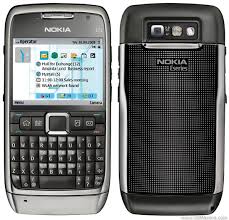
NOKIA E71

Dimensions : 114X57X10

Weight : 127 gms

Talktime : 10.5 hrs

Standby : 408 hrs

Screen : 16 million colors

Size : 2.36"

Expandable : 8 GB

Bluetooth : Yes

Wi-Fi : Yes

Camera : 3.2 Mp

Flash : Yes


Vedio
: Yes

Phone book :
Shared

Frequecy :
Quad Band

GPRS/EDGE/3G:
Yes/Yes/Yes

Operating System :
Symbian S 60

Music Player :
Yes

FM Radio : Yes


Form Factor: Bar

Touch Screen :
NO

QWERTY :
Yes

Burn test rating
: 84

Price : Rs.19,100

Saturday, September 5, 2009

ENCRYPTION IS SAFE FROM FUTURE QUANTUM COMPUTERS?


One of the themes of Dan Brown’s The Da Vinci Code is the need to keep vital and sensitive information secure. Today, we take it for granted that most of our information is safe because it's encrypted. Every time we use a credit card, transfer money from our checking accounts -- or even chat on a cell phone -- our personal information is protected by a cryptographic system
But the development of quantum computers threatens to shatter the security of current cryptographic systems used by businesses and banks around the world.
“We need to develop a new encryption system now, before our current systems -- such as RSA -- becomes instantly obsolete with the advent of the first quantum computer,” says Prof. Oded Regev at Tel Aviv University’s Blavatnik School of Computer Science. To accomplish that, Prof. Regev has proposed the first safe and efficient system believed to be secure against the massive computational power of quantum computers and backed by a mathematical proof of security.
Secure for Centuries

Prof. Regev stresses it is imperative that a new cryptographic system be developed and implemented as soon as possible. One reason is that current information, encrypted with RSA, could be retroactively hacked in the future, once quantum computers are available. That means that bank and other financial information, medical records, and even digital signatures could instantly become visible.
“You don’t want this information to remain secure for just 5 or 10 years until quantum computers are built,” says Prof. Regev. “You want it to be safe for the next century. We need to develop alternatives to RSA now, before it’s too late.”
New Cryptographic System

Cryptographic systems are used to transmit secure information such as bank and online transactions, and typically rely on the assumption that the factoring problem is difficult to solve. As a simplified example, if the number 3088433 were transmitted, an eavesdropper wouldn’t be able to tell that the number is derived from the factors 1583 and 1951. “Quantum computers can ‘magically’ break all of these factoring-based cryptographic systems, something that would take billions of years for current computers to accomplish,” Prof. Regev explains.

The current gold standard in encryption is the universally used RSA cryptosystem, which will be instantly broken once quantum computers are a reality -- an event predicted to happen as early as the next decade. To replace RSA in this new reality, Prof. Regev combined ideas from quantum computation with the research of other leaders in the field to create a system that is efficient enough to be practical for real-world applications. Prof. Regev’s work was first announced in the ACM Symposium on Theory of Computing and will appear in the Journal of the Association for Computing Machinery. His work has now become the foundation for several other cryptographic systems developed by researchers from Stanford Research Institute, Stanford University, and MIT. Its potential real-world applications are extensive, ranging from banking transactions to eBay and other online auctions to digital signatures that can remain secure for centuries.

Friday, September 4, 2009

THE FUTURES SUPER FAST COMPUTER


Computers which use light to process large amounts of data faster than ever before are just one of many groundbreaking potential applications of a new £6 million research programme at Queen’s University Belfast and Imperial College London, launched September 1, 2009.
The Engineering and Physical Sciences Research Council (EPSRC) is funding the two universities to establish a world-leading research programme on the fundamental science of so-called ‘nanoplasmonic devices’
Nanoplasmonic devices’ key components are tiny nanoscale metal structures - more then 100 times smaller than the width of a human hair – that guide and direct light.

The structures have been tailor-made to interact with light in an unusual and highly controlled way. This means they could one day be used to build new kinds of super-high-speed ‘optical computers’ – so named because they would process information using light signals, instead of the electric currents used by today’s computers.

At present, the speed with which computers process information is limited by the time it takes for the information to be transferred between electronic components. Currently this information is transferred using nanoscale metallic wires that transmit the signals as an electric current.

To speed up the process, the scientists at Queen’s and Imperial hope to develop a way of sending the signals along the same wires in the form of light.

In order to achieve this, they are developing a raft of new metallic devices including tiny nanoscale sources of light, nanoscale ‘waveguides’ to guide light along a desired route, and nanoscale detectors to pick up the light signals.

Similar approaches may also help in the development of devices for faster internet services.

Professor Anatoly Zayats from the Queen’s University’s Centre for Nanostructured Media who leads the project said: “This is basic research into how light interacts with matter on the nanoscale. But we will work together with and listen to our industrial partners to direct research in the direction that hopefully will lead to new improved products and services that everyone can buy from the shelf.”

Professor Stefan Maier, who leads the research team at Imperial added: “This is an exciting step towards developing computers that use light waves, not electrical current, to handle data and process information. In the future these optical computers will provide us with more processing power and higher speed. This will also open the door to a world of possibilities in scientific fields at the interface with the biosciences, and perhaps even in the world of personal computing.”

The project is also supported by INTEL, Seagate, Ericsson, Oxonica, IMEC and the National Physics Laboratory.